Health Benefits of Raw Honey
November 16, 2022
by Lisa Johnson
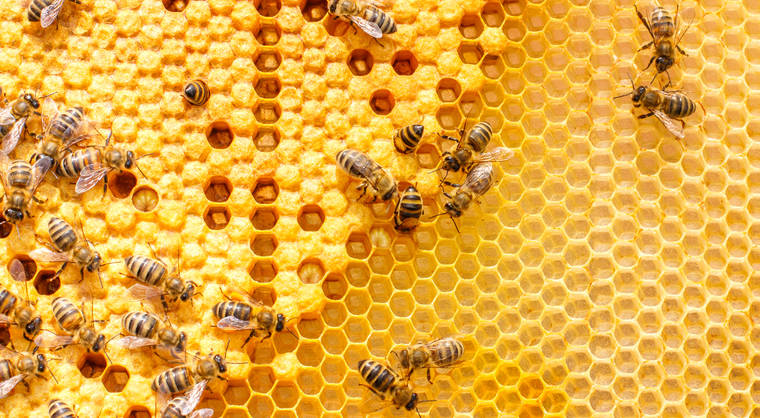
Learn some ways honey and pollen can help relieve ailments like allergies and even burns.
Bees and Pollen
We all know that the cute little honey bee is covered with hair! This means that when the honey bee is foraging on flowers, they end up covered in pollen because it sticks to those hairs. Then, when the honey bee cleans herself (yes- all foragers are female!) she makes a ball of pollen to be carried on her hind legs. She then brings the pollen back to the colony.Inside the hive, when the foragers arrive, they are greeted by their hive mates to continue the honey making process. The pollen is off loaded to nurse bees by being stored next to their young to feed them. While pollen is being taken care of other foragers arrive to the hive with nectar to be off loaded. The honey bees that are coated in pollen are also working on the transformation of nectar into honey. This means that pollen ends up present in honey.
Allergies and Pollen
When you suffer from pollen allergies one way to give yourself relief is to ingest the pollen through honey. It is the most delicious way to say the least! Allergists will always suggest allergy shots that contain small amounts of the allergen. The theory is with enough self-immunity through ingesting the pollen or through an allergy shot, the body can kick off it’s immune system to fight the allerfen so it is no longer afflicted by it.Based on that theory, taking a teaspoon of honey each day seems like a much sweeter way to attempt to accomplish immunity than through allergy shots. As Mary Poppins sang, “A spoon full of sugar helps the medicine go down”. There are as many scientific papers that suggest that honey helps with pollen allergies as studies that deny it. What is known, however, a teaspoon of honey a day couldn’t hurt- it just sweetens your day!
Honey’s Healing Properties
In recent years, the medical community has begun using honey bandages in the Western World. Honey has antibacterial properties. Because honey is less than 18% water it is a supersaturated sugar solution , the high ph level (it is on the acidic side), and its ability to naturally produce hydrogen peroxide creates an inhospitable environment for bacteria to grow. This makes honey a natural and effective healing aid that doctors can depend on.
Burn Unit Patients
In many burn units throughout the world, honey bandages are heavily used. There is a specific honey from New Zealand used in these units. The honey bees of New Zealand forage the nectar of the Manuka bush making Manuka honey. This honey is known for its extraordinary antibacterial property, and it has a higher enzyme count than other honey varieties. This means that when it encounters wounds, its ability to create hydrogen peroxide is greater than most honey.Many Veterinarians have also implemented the use of honey bandages. During the California wildfires much wild life was afflicted with burns. As one could imagine- these poor burned wild animals make difficult patients. By using a natural product like honey, the animals are not harmed if they licked their wounds, which is a concern with other medical healing aids that could make the animals sick if ingested.
Did you know honey bandages have been made available to the general public? Most pharmaceutical chains carry these bandages. The innovative use of this option helps limit the overuse of topical antibacterial ointment. It is best to allow wounds to heal using raw honey and save the serious antibiotic ointment for bigger problems.
Athletes
Honey is a supersaturated monosaccharide solution. What this translates to is honey is a compacted quick energy food. A monosaccharide is a simple sugar that is easily digested. Most athletes are looking for a fast replenishment of energy. Honey is the most natural way to regain energy. It is quick to digest for that burst of energy that athletes need.Folk Medicine
Remedies using honey have been around since the ancient Greeks. There are ancient recordings of prescriptions using honey for both internal and external use.Old time beekeepers passed down their version of a cold remedy and it is a very simple task as follows:
• Use an 8 oz mason jar with a screw top lid, and clean thoroughly.
• Slice one whole lemon with the skin on in ¼ inch slices.
• Peel and slice thinly, a two inch piece of fresh ginger.
• Alternate slices of ginger and lemon until the jar is filled.
• Very carefully fill with honey.
• Keep the jar in the refrigerator.
• Take a tablespoon a day during cold season.
• When the honey is gone use the lemon in cold water during the summer, or use the lemon slices in hot tea during the winter.
Honey really does more than just sweeten your tea. Try making the honey-lemon-ginger mixture and use it during the cold season. When you need a bandage for a cut, reach for the honey, and see if helps heal the would faster (if minor only!). And when it is springtime, go with Mary Poppin’s suggestion and try a teaspoon of honey for you allergies. It is a delicious way to start your day!