A Day in the Life of a Honey Bee
August 31, 2022
by Cal Orey
Out of the nectar of flowers in the honey
Sac of various bees."
Merriam-Webster’s Collegiate Dictionary
Honey, one of the oldest sweeteners, comes from flower nectar that has been consumed by the honey bee, which was originally found in Europe. Known as the “nectar of the gods” as far back as 5,000 years ago it was used for medicinal purposes, in cooking, and as a preservative in cosmetics, soaps, and even the beeswax has been used for candles. But there is more to intriguing story behind the life of the honey bee.
Meet the Honey Makers
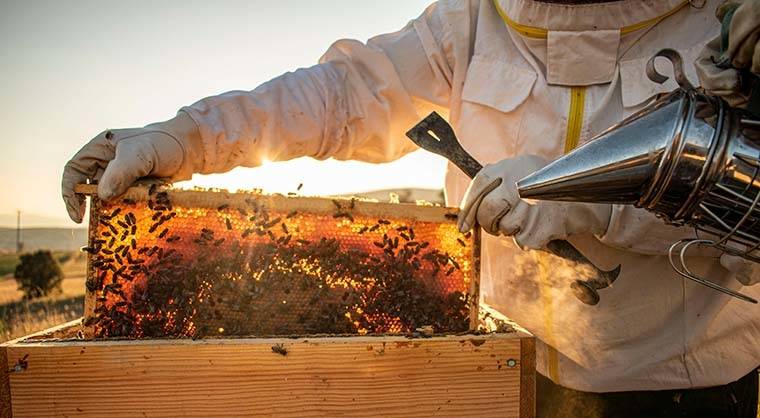
So, how exactly do honey bees make honey, anyhow? They diligently collect nectar from flowers and other plants and carry it to the hive. It’s those honey bees that are responsible for transforming the floral nectar that they gather into honey by adding enzymes to the nectar and reducing moisture.The honey bee full of nectar comes back to the hive and goes to work. Honey is stored in hexagonal chambers. The honeycomb structure of the hive also has rooms for the queen bee to lay her eggs. Before honey is available to put in your tea or on top of a muffin, the honey-covered walls of the hive are removed and placed in a spinner. Rotated fast, the spinner separates the liquid honey from the comb.
Once extracted straight from the comb honey is mostly a combination of fructose, glucose, and water. This sweet gift also contains other sugars, enzymes, minerals, vitamins, amino acids, and many types of antioxidants – the good for you compounds that help keep your body inside and outside healthy.
…And Key Pollinators
Beekeepers know that honey bees provide service essential for human life. After all, they pollinate one-third of the food we eat. As a bee travels in search of nectar, it brushes against pollen-bearing parts of a flower and picks up pollen. When the honey bee goes to another flower for more food, some of the pollen from the first flower sticks to the second flower – the flower is pollinated.
The honey bee pollinates more than 90 crops, including apples, blueberries, citrus fruit, and nuts – approximately four-fifths of the fresh fruits and vegetables we harves. Indeed, hardworking honey bee colonies (40,000 to 60,000 bees per hive, including workers, drones, and one queen) who work double duty (like hardworking humans) are man’s best friends because they are vital to our planet.
“Honey bees are woven into our food chain. Without honey bees the whole food chain would be diminished in diversity and quantity for us,” explains one Nevada beekeeper in Nevada.
8 Buzz-worthy Bits
Since the honey bee and mankind are connected because of our food chain, it makes sense to dish out a spoonful of honey trivia to show you just how the honey bee is an un-bee-lievable man’s best friend. Take a look at these 8 buzz-worthy bits – courtesy of the National Honey Board -- that’ll get you thinking about this amazing small creature and what it can do.1. The average honey worker bee makes a mere 1/12 teaspoon of honey in her lifetime.
2. Honey bees communicate by dancing. The waggle dance alerts other bees to where the nectar and pollen are.
3. A honey bee must tap about 2 million flowers to make 1 pound of honey.
4. It would take about 2 tablespoons of honey to fuel a bee’s flight around the world.
5. A worker bee visits about 50 to 100 flowers during each trip.
6. A honey bee flies about 15 miles per hour.
7. A hive of bees flies more than 55,000 miles to bring you one pound of honey.
8. The U.S. Department of Agriculture estimates that there are approximately 3 million honey-producing colonies in the United States.
The Bottom Line
The hardworking honey bee flies the extra mile so it can produce honey. Honey is considered by some to be a superfood, or a food that has multiple health benefits for people. And note, on average, each person in the United States consumes about 1.31 pounds of honey each year! Indeed, the honey bee is one of nature’s greatest gifts to mankind.Hungry Yet? Try some!
Adapted from The Healing Powers of Honey: A Complete Guide to Nature’s Remarkable Nectar! (Published by Kensington Publishing Corporation)
Cal Orey, M.A., is an accomplished author and journalist. She penned the popular Healing Powers Series.