A Beekeeper's Journal: Raw Honey, The Aroma of Happiness
April 12, 2023
by Martine Gubernat
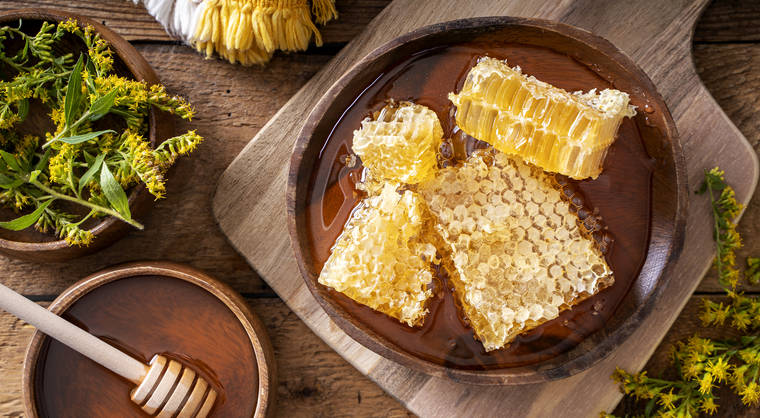
When we walk anywhere near our backyard apiary, our senses are stimulated by our honey bees as they become more active now that the daylight is extended and the weather is warmer. We love the sight of thousands of bees bobbing up and down in front of their hives as they orient to the sun before flying off in pursuit of pollen and nectar; we enjoy the sound of their buzzing as six colonies worth of bees go about their business both inside and outside of the hives.
In addition to those noticeable sights and sounds in our apiary, one of the things that we missed the most during the cold winter months is the smell of beeswax and honey as they are warmed by the bees and the sunshine of spring.
The Science on Scent
There is a fascinating reason for this. Scientific research supports that smell is the one sense most strongly linked to memory and emotion.For humans, incoming smells are processed by a the olfactory bulb, which starts inside our nose and then moves along the lower part of our brain that is linked to emotion and memory. Sight-, sound-, and touch-triggers do not pass through those same brain areas.
Scent, Memories, and Emotions
Therefore, while seeing and hearing the bees in the yard indeed makes us happy, smelling the beeswax and honey triggers deeper emotions and fond memories – the excitement of assembling and painting our new hive boxes in preparation for getting our first nucs many years ago, the thrill of picking up and installing our first batch of honey bees in our very own hives. The pride of developing the nucs into full and robust colonies, and the anticipation of harvesting and tasting our own honey. Even these words prove inadequate to convey those memories as compared to the feeling associated with breathing in the scent of beeswax and honey in our apiary once again.On a Bee's Sense of Smell
Ironically, this appreciation for our sense of smell links us even more closely to our honey bees since their behavior and survival are dependent on their acute sense of smell. From scenting the pheromones of their queen, to sorting out friend from foe bees, to locating their hive when they fly home, to foraging for pollen and nectar, honey bees rely on detecting smell through their mouths, antennae, and tips of their legs.Because our bodies react to insect stings, our sense of touch is not always a pleasant experience (but as we tell anyone who asks, getting stung is usually our own fault!); however, the sights, the sounds, the tastes, and most importantly the scents of our hives stimulate our senses, making us happy to have honey bees actively flying and foraging in our yard once again.
We have always known that bees are “scent-sational! Now that our apiary is once again filled with bees, our yard feels more like home.

Smell it for Yourself
If you’re curious about the scent of honey, consider trying one of the Adagio Bees' samplers boxes, which offers a great opportunity to try several types of honey in one purchase.Here’s a tip: I keep a few sampler jars on my windowsill so the sunlight gently warms the honey. When I open each jar, the aroma is released, helping guide my decision about which honey to add to my tea, or English muffins, or yogurt and granola. Sometimes when I crave a sweet treat, I simply enjoy it on a spoon!