A Beekeeper's Journal: Females Rule the Colony
July 21, 2023
by Lisa Johnson
About the Colony
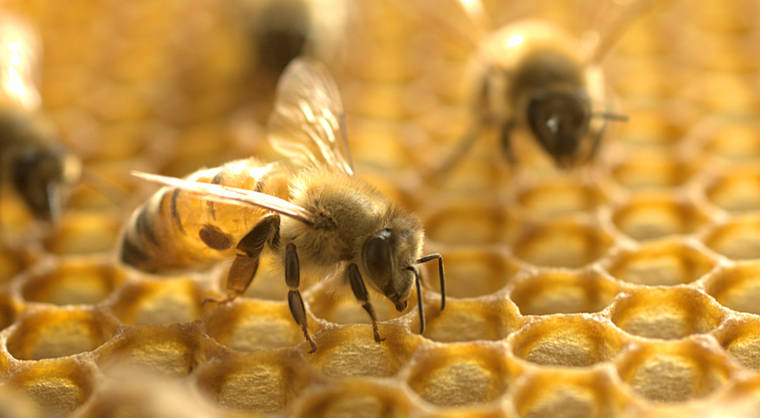
I am an expert in swarms. It all begins with the colony and our colony lives in a hive.At the height of summer we can number 40,000 or more. Worker bees are all female and we make up 85% of the colony. The drones are the male bees and they only number about 15%.
There is only one queen. She is the only one to lay the eggs. We are known as a super-organism. This means we all work together for the good of our colony. So if you think of my colony as one unit, all units on the planet want to reproduce allowing our species to survive. When I sue the term “swarm” it means that our colony is healthy enough to reproduce a new honey bee colony.
A Collective Decision
As a collective honey bee colony the decision to swarm is not up just the queen nor an individual female worker bee like myself. As a super-organism each class of honey bee contributes to the decision.When the foragers have excess pollen and nectar as food stores, it is a good time to swarm. Or, if the queen lays enough eggs to populate the colony then there is an excess amount of bees needed in the colony, which can also force us to swarm for the good of all.
Another time to swarm is when the nurse bees notice that the foragers filled all the hive cells with excess food causing the queen ran out of room to lay more eggs.
Yet another time to swarm is when the drones have reached 15% of the colony population. What's interesting is that the amount of drones in the colony is decided by the queen! The queen honey bee is one of the few species in the animal kingdom that decides the sex of her off spring. Talk about the Power of Women! Once the queen has produced about 15% of drone in the colony, there will be enough male honey bees to mate with virgin queens and it is time to swarm.
Next Steps: House Hunting
Once the colony has decided to swarm the real work begins. This can be a month long process.First, the scout bees are sent to look for a new hive location. Our primary goal is a void in a tree about fifteen feet off the ground. Our natural enemy, the bear, will not find us high up in a tree. If the bear does find us, it will eat us. As much as the bear has a sweet tooth for our honey stores, the bear is really wanting to eat us because we are the protein to the bear. If the bear often kills our queen during the attack, and our colony dies without her. Our scout bees have a very important job to find a safe home for us.
The Next Generation Queen
While the scout bees are house hunting, it is my turn as a worker bee to help raise the replacement queen.We worker bees decide which egg the queen laid to make into the new queen. When the egg is chosen a larger cell is made by the worker bee. It has a larger shape almost like a shelled peanut! The nurse bees have fed this queen on Royal Jelly. This is a very specific food reserved only for feeding queens. It is produced in the nurse bee’s hypo pharyngeal gland.
It will be sixteen days before the new queen emerges.
Pieces Coming Together
During those sixteen days of waiting for the new queen to emerge, I have another job. That job is to get our queen in shape to leave with our swarm.About half of the colony stays in this hive with the new queen while the other half swarms with the old queen to rebuild. The old queen has not left the hive since her virgin flight possibly years ago. Queens can live up to seven years.
When they emerge, they take their first flight out the of the hive to mate. The virgin queen can mate with up to thirty five drones in that single flight.
Once the queen is back in the hive she begins to lay eggs and stays in the hive. That is unless the colony wants to swarm.
The first thing we do is stop her from laying eggs by filling the cells with nectar. We then make her move fast to exercise her flight muscles to enable her to fly on swarm day.
Decision Day
Swarm day is called by the scout bees.When the scout bees find a perfect new home, they must tell the colony where the home is located. They do that by performing a special dance to alert the colony of the location.
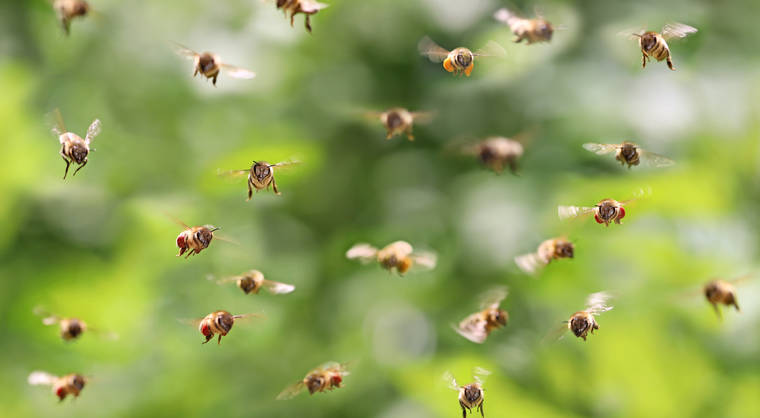
Usually in the afternoon, the scout bees rouse the colony and about 20,000 or more honey bees fly out of the hive. We look like a thick cloud of bees.
Then we all swirl upward like a tornado! With all our wings flying at once we sound like a freight train. Our scout bees are leading the way to our new home.
Our first stop is a nice limb of a tree. We packed pretty heavy so we can’t fly very far. When I say “packed” I mean we loaded our honey stomachs with our honey stores from the colony. We took enough honey to supply the swarm with food. As soon as we are in our new hive, we will start to build new honeycomb.
Our honey will give us the energy we need to get our wax lands to produce wax. With the wax we build comb. In that comb we can place excess honey and the queen can start to lay eggs to begin our new colony.
The Role of the Beekeeper
Being on this limb has left the colony out in the open and vulnerable.All our energy is focused on finding a home so we don’t care who is around us. We have no home to defend. This means we appear very gentle. Our location has been spotted by a beekeeper.
The beekeeper comes in handy.
The beekeeper always has extra empty hives for swarms. I can feel the limb being shaken. Our whole swarm is falling into the hive box the beekeeper is holding. There are new frames of was for us to start building new comb. This hive has plenty of space. I see the queen is with us in our new home and we can start rebuilding!