Where Raw Honey Comes From: All About Beeswax
January 06, 2023
by Lisa Johnson
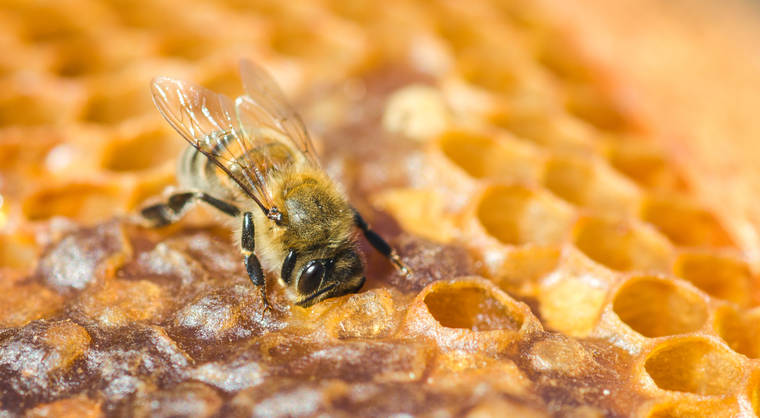
Where does it come from?
We know that the honeycomb hexagonal shape, but so many things remain a mystery about how it's made! We're familiar with the candles that are buttery lemon color which burn smokeless, and recognize beeswax yet very few really know where it comes from. So where?! How?Beeswax is a product that is made within the bodies of the honey bee.
Bee Biology
The honey bees that can produce wax are a certain age.When honey bees emerge from their cells their first job is the feeding of the young. These honey bees are called nurse bees. Around the second week of the wax gland develops. It is at this age (two weeks) with mature wax glands, can honey bees produce wax. These glands are located at the end of the underside of their abdomen. The wax that is secreted is in liquid form.
The inside of the hive must have a temperature between 95 – 97 degrees Fahrenheit so that the wax produced is secreted in liquid form. The liquid drop of wax is deposited upon plates (called mirrors) and solidifies. The honey bee uses her back legs to pick off this flake of wax. She uses her mandibles to chew the wax flake to make it soft. This is then used to build their honeycomb.
This is a very energy expensive process for the honey bee. A minimum of eight pounds of honey is consumed by the bees to provide enough energy to produce a pound of wax.
Beeswax and Beekeeper
Beeswax is a very important part of a beekeeper’s business. In the not so distant past, beeswax was more valuable than honey. The reason being, beeswax was used to make candles. Candles were our only source of light at night way back when.Beeswax was also very important in the process of metal casting. Gold jewelry was made by the lost wax process through out the ancient world. There is a resurgence in the art world of encaustic art. Encaustic art is painting with pigmented wax.
Ancient Egyptians used beeswax in their embalming methods. Most medicinal formulas in ancient times used beeswax as an ingredient. Even in today’s times, beeswax is an important ingredient in cosmetics. The best soaps are made with beeswax.
Beeswax is as important to beekeepers as a product of honey bees as honey!
How Beekeepers Harvest Honeycomb
The largest source of beeswax harvested from the hive happens during uncapping of the frames. Paper thin sheet of wax are sliced off each frame that is harvested. This is premium beeswax. Wax cappings are newly produced by the honey bees to cap their honey supply. This beeswax is separated from any other wax taken from the hive. It is the purest and cleanest beeswax. The color is the light straw color and most prized. This is the beeswax used most in candle making.Processing the Wax
The first part of the process is to clean the wax. The wax which will contain honey, bee parts, old dark comb should be washed in either distilled or soft water.Beeswax contains fatty acids and if it comes into contact with minerals from hard water, the beeswax changes nature (texture) and is no longer good for candle making. The next step is to melt the wax. Wax should only be melted in aluminum or stainless steel pans. The wax will discolor in any other metal pan.
The most important part of wax melting process to remember is that wax is highly flammable. Never leave melting wax unattended. Never melt wax over an open flame. Wax melts best between 143 – 147 degrees Fahrenheit. Never let the wax heat past 185 degrees Fahrenheit.
An Easy Wax Melter at Home
The easiest and safest way to melt wax all year round is an inexpensive crock pot.The crock pot will solely be used to melt wax. Using and old white t-shirt (cut as an open sheet) place all the wax into the cut t-shirt so it will line the crock pot. Add distilled water or soft water over top of the wax with the t-shirt lining the crock pot. Turn the crock pot too low and watch for the wax to melt.
After the wax melts slowly, lift the t-shirt from the crock pot. The water and wax will filter through the cloth and all the debris will stay on the t-shirt when it is lifted out. The debris has a specific name – slum gum. Slum gum will be bee parts, dirt and anything that is not wax.
The crock pot is then turned off. The t-shirt and the slum gum is thrown out. In a short period of time, the wax has floated to the top of the water and formed a disc. When wax cools it does shrink enough to release from the walls of the crock pot. The disc can be easily removed.
If any debris stayed behind with the wax it will be on the underside of the disc. Once the wax is totally cooled can the debris be scraped off. This clean wax disc can then be remelted in a double boiler to pour for candles.
Solar Wax Melters
Most hobby beekeepers melt the harvested wax in a solar wax melter.Solar wax melters are simple to make at home. Specific plans for solar wax melters are found on line. The basic principal is the green house effect. It works by using long-wave radiation to melt the beeswax. Using and aluminum pan five inches below a thick piece of clear plastic, the wax will take a few hours to melt in direct sun. The pan must be sloped slightly with a wire mesh to filter the slum gum. I use a washed empty milk container to catch the melted wax.
Showing Beeswax at a Honey Show
Honey Shows are an important part of a beekeeper’s life. This is the place to bring awareness of all the products beekeepers produce to the general public.At state and county fairs there will be a Honey Show. This is where beeswax and everything else is judged. Beeswax is judged by its color, cleanliness, uniformity of appearance, and freedom from cracking and shrinkage. The array of beeswax forms can be seen at the Honey Show. Everything from one pound blocks to tapered candles to free from art produced by using beeswax is found at a Honey Show