A Beekeeper's Journal: A Day in the Life
September 07, 2022
by Lisa Johnson
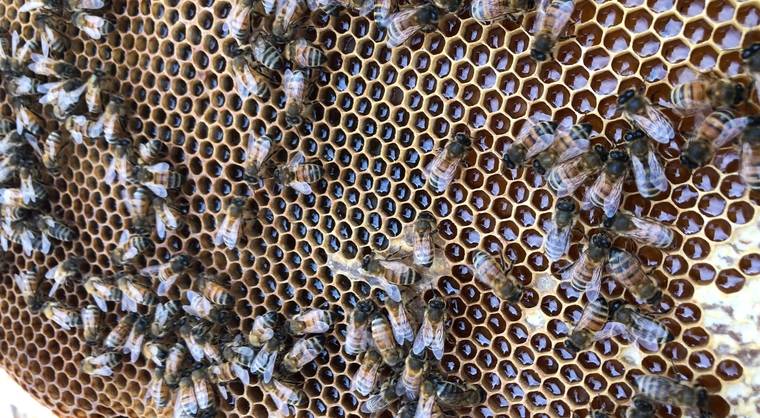
Spring time is the greatest time for blooming plants, including trees, shrubs, flowers and grasses. The blooming plants produce pollen for pollination and nectar to entice pollinators like bees. This is dubbed The Nectar Flow by beekeepers. It is during this time the honey bees collect the most nectar to transform into honey.
Let's explore what this time looks like for a beekeeper.
Honey Boxes
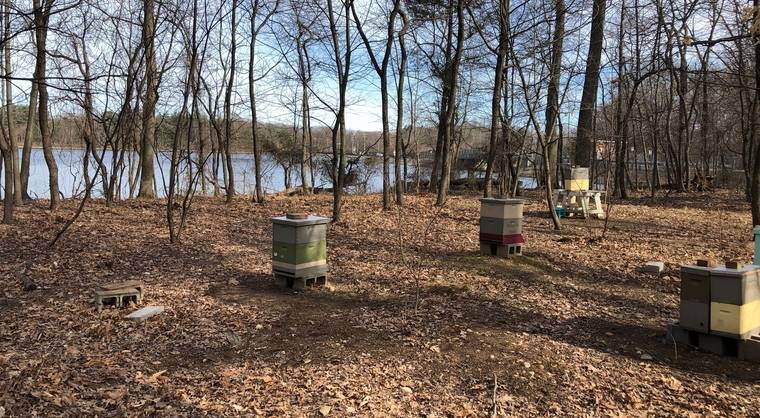
Once early summer begins the nectar flow ebbs. This is the time that I check the boxes on the hives that are holding excess honey stores.Honey bees are natural hoarders. I configure my hives with two deep brood (the young) boxes then I use medium size boxes over top of my deep boxes and call them my honey supers. The honey bees always keep honey over top of their brood (young) to easily feed them.
During this nectar flow, the queen is also laying 1,200 eggs a day! By laying so many eggs, she can easily maintain a honey bee colony colony population of 40,000 as a regular bee lifespan is, on average, twenty days during this time of year. Queens, on the other hand, can live much longer - up to several years!
So what do all these tens of thousands of honey bees do? They forage for nectar. But, there's a dilemma. The bees need space for that nectar to feed the colony, and the colony needs space for all those eggs the queen is laying. This is where I, the beekeeper, come in.
I start to add boxes of frames so the honey bees have a place to store all that honey and eggs. Each super box has ten frames to store honey. I have hives where seven super boxes were needed to support a colony. That type of colony is called a production hive. Production hives really like to hoard honey. Well over one hundred pounds of extra honey can be harvested just from that one production hive in a season.
Over Wintering
To understand the extent a colony can produce honey and what can be harvested from them, beekeepers need to understand that a healthy colony will need eighty pounds of honey in the North East to survive the winter. This is called over wintering.After all the honey supers are removed for harvest, the two deep brood boxes remain. Within those two boxes, there must remain 80 lbs of honey for the bees to consume during the entire winter so that the colony has enough food to survive.
Honey bees are overachieving workaholics and the beekeepers take advantage of this trait. It is the skill of the beekeeper to know when to remove the excess honey and when to stop to let the honey bees fill their boxes for winter.

Capped Honey Frames
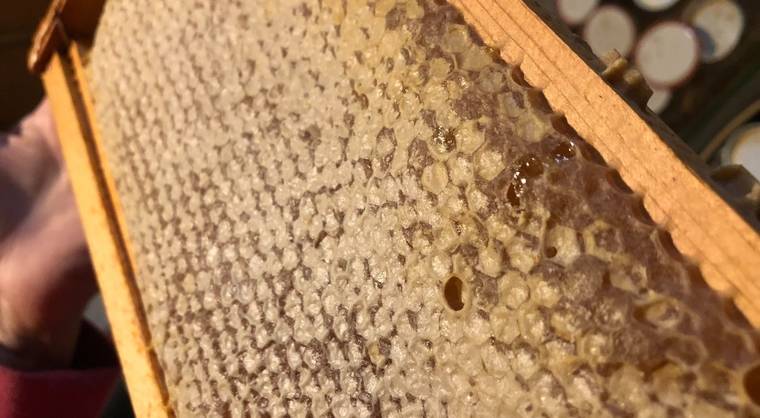
Let's go to the end of June and most of the plants have slowed their bloom.I like to go into the honey supers and check each frame. I am looking for 75% or greater capped frames. Capped frames are frames where the bees completed the evaporation of the nectar down to seventeen percent water and then capped the cell with wax.
The honey bees have a gland under their abdomen which produces a flake of wax. The honey bees use this wax to seal the cell in the honey comb that is filled with honey. Once these frames are capped, I know I can harvest that frame.
Pulling frames from the hives
Now comes the hard work. I go through each frame of each box to make sure I have fully capped frames.This is all heavy lifting. Each box can weigh 30 lbs. If I deem the frame worthy of harvesting I shake and brush off the bees from the frame. Believe it or not, the honey bees are not that interested in the fully capped frame of honey. They willingly fly back into the hive.
I then place each frame into a large lidded tub. I only take frames ready for harvest. If the super box is not fully capped and isn’t ready for harvest, I put it back on the hive. I come back each week and check.
Why harvest capped frames only?
The most important part of harvest time is for the beekeeper to only harvest capped honey.If the honey is not capped that means it has higher water content. High water content in honey starts fermentation. While fermented honey can be desirable for some, it changes the taste of the honey and the shelf life. While honey doesn't expire, fermented honey definitely does!
If the frame is not capped, the bees have not finished evaporating the nectar. Seasoned beekeepers know this and only harvest capped honey. In the field, a beekeeper can take a sample of honey and see the immediate results of the honey’s water content with the use of the refractometer.
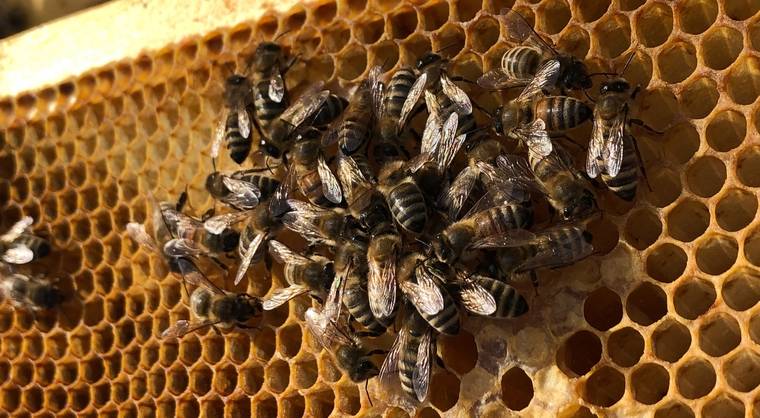
(Did you notice the queen in the above photo? Take another look for her elongated abdomen.)
The Honey House
Now that the capped frames are in the tubs and out of the hive, these tubs are brought to the honey house.Honey house is a term used to denote where the honey is extracted. It is away from the bee yard, usually inside with the windows shut because the bees will eventually follow the honey!
It must have running water for washing implements because honey is very sticky. The honey house will have all the tools and gadgets needed to extract the honey.
Extraction
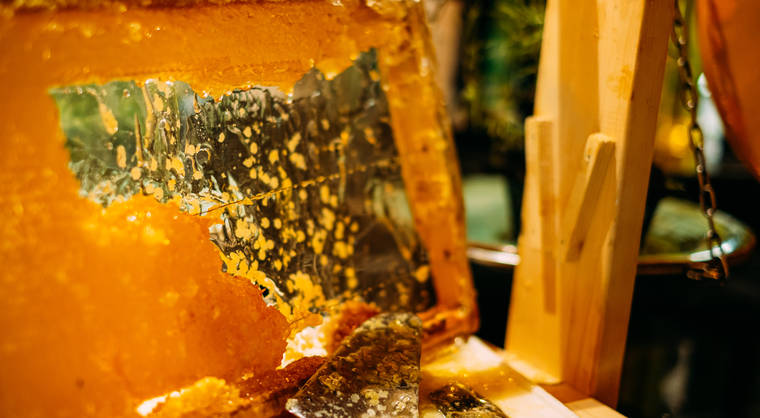
Inside the honey house I use the uncapping tank first in the honey harvest process. The uncapping tank looks like a big plastic tub with yet another tub inset that has holes on the bottom. There is a wood bar across the open tank. I take the capped frames and hold it over the uncapping tank on that wood bar. With a specially made serrated knife, I slice a paper think layer off the surface of the frame. This thin cut layer exposes the cells of honey. The sliced wax drops into the tank to drain and later be melted for candles.The frames with the exposed honey are placed into the extractor (just like a centrifuge) and the honey is spun out of the cells of honey comb of the frames. There is a honey gate at the bottom of the extractor tank where the honey can flow out. The honey pours into a food grade plastic bucket that has two strainers on top. There is a coarse strainer and a fine strainer. Together they filter out bee parts and large pieces of wax. It allows the honey with pollen to flow through. No heat is involved so this honey can be called Raw Honey.

Back to the Bee Yard
Once the extraction is finished, I now have frames in which all the honey has been extracted from the honey comb. These are called wet frames.The frames are “wet” from honey left from the extractor. I bring these wet frames back to the bee yard and put them back on the hives. When I place them on the hive it is exactly like giving your kids the bowl of icing after you iced the cake. Both get licked clean!