Can Honey Ferment?
August 26, 2026
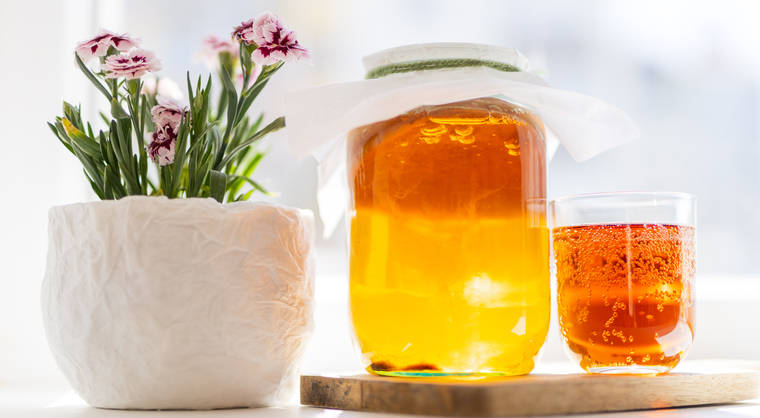
So, can honey ferment? Yes, under the right conditions. Its remarkable stability is neither magic nor absolute. The central character in this domestic drama is water.
Why Honey Usually Resists Fermentation
Bees begin with nectar, a dilute solution of sugars in water. Back at the colony, workers process the nectar and evaporate much of its water by moving air across the comb. Once the honey is sufficiently concentrated, the cells are capped with wax. Properly ripened honey commonly contains less than 20 percent water, although the exact amount varies.
At that concentration, honey presents microbes with an inhospitable environment. Its abundance of dissolved sugars leaves relatively little water available for microorganisms to use. Honey is also naturally acidic. Together, these qualities help explain its celebrated shelf life.
They do not make it invincible. Certain sugar-tolerant yeasts, known as osmophilic yeasts, can survive in honey, but its low available moisture normally prevents them from multiplying enough to cause noticeable fermentation. Give them enough additional moisture, however, and fermentation becomes possible.
How Moisture Enters the Jar
Honey is hygroscopic, meaning it readily absorbs moisture from the surrounding air. A jar left open in a humid kitchen can gradually take up water, especially at the exposed surface. A wet spoon introduces water more directly. Honey harvested before the bees have sufficiently reduced its moisture can also begin with a greater risk of fermentation.
Crystallization adds an interesting wrinkle. When glucose separates from the liquid and forms crystals, more of the honey's water remains concentrated in the liquid portion. Crystallized honey is not spoiled. It has undergone a normal physical change influenced by sugar composition, temperature, and tiny particles that give crystals places to form. But if the honey already contains unusually high moisture, that remaining liquid can become more hospitable to yeast.
How quickly this happens varies considerably by varietal. Tupelo Raw Honey, with its mild floral and fruity character, is particularly slow to crystallize, while Sourwood Raw Honey, a light amber honey with notes of anise and maple, can also remain fluid for an extended period. A honey's tendency to stay liquid, however, should not be confused with its resistance to fermentation. Every varietal benefits from protection against added moisture.
There is no single moisture percentage at which every honey suddenly begins fermenting. Risk increases as water content rises and also depends on factors such as storage temperature and the yeasts already present.
Signs That Honey May Be Fermenting
Unwanted fermentation may produce persistent bubbles, foam, pressure beneath the lid, or separation into distinct layers. The aroma can become alcoholic, sour, yeasty, or unusually fruity. A jar may leak or hiss when opened. These signs differ from granulation, which can make honey cloudy, thick, or solid without producing gas or a fermented smell.
Flavor alone is not a reliable way to evaluate questionable food, so suspicious honey should not be sampled simply to diagnose it. If honey is persistently foaming, leaking, moldy, under pressure, or distinctly off-smelling, the prudent choice is to discard it.
Fermentation by Invitation
The same transformation can, of course, be deliberate. Mead begins when honey is diluted with water and fermented by yeast. Depending on the ingredients, yeast, and method, the result can range from dry and delicate to sweet and richly aromatic.
The important distinction is control. Mead makers intentionally adjust the water content, select yeast, manage sanitation, and monitor fermentation. A forgotten jar visited by a wet spoon is not a tiny artisanal meadery. It is an uncontrolled food experiment.
How to Keep Honey Stable
Store honey tightly sealed at a stable room temperature, and use clean, completely dry utensils. Avoid leaving the jar open near a steaming kettle, humid stovetop, or sink. Refrigeration is generally unnecessary and often makes honey crystallize faster, although the crystals remain perfectly edible.
If crystallization occurs, place the jar in warm water and stir the honey gently as it loosens. Avoid excessive heat, which can diminish delicate aromas. This is especially worthwhile with characterful honeys such as Buckwheat Raw Honey, whose dark, malty, molasses-like profile is part of its pleasure.
Honey lasts because bees transform watery nectar into a remarkably concentrated food, and careful storage preserves that balance. Fermentation is the exception that reveals the chemistry. Add enough water, and even the quietest jar may begin to change.