Tupelo Honey: The Rarest Bloom in the Swamp
September 08, 2026
by Adagio Bees
Somewhere along the Apalachicola River in the Florida Panhandle, in a two-week window most people never notice, the white tupelo trees bloom over the swamp. Beekeepers race the clock to get their hives in place before the flowers open and gone before they close. Miss the window and you've missed Tupelo Honey for the year. This is not an exaggeration for marketing effect — it's simply how narrow the harvest really is.
A Honey That Only Happens Once a Year, in One Place
True Tupelo Honey comes from the nectar of the white Ogeechee tupelo tree (Nyssa ogeche), which grows in the wetlands of the southeastern United States and is especially associated with the Apalachicola River basin. The trees bloom for only a few weeks each spring, and beekeepers move their hives into the swamp — sometimes by boat — to catch the bloom before it passes.
Because the window is so short and the location so specific, genuine Tupelo Honey has always been scarce. It's one of the few honey varietals where the origin story isn't a flourish added after the fact — it's the reason the honey exists at all.
Why It Barely Crystallizes
Most raw honey crystallizes eventually. Glucose, one of honey's two main sugars, is less soluble in water than fructose, so over time it can separate from solution and form crystals — a natural process, not a flaw, as we cover in our guide to why raw honey crystallizes.
Tupelo Honey is unusual. It typically has a high fructose-to-glucose ratio, and with proportionally less glucose available to form crystals, Tupelo can remain smooth and pourable far longer than many other honey varietals.
What It Tastes Like
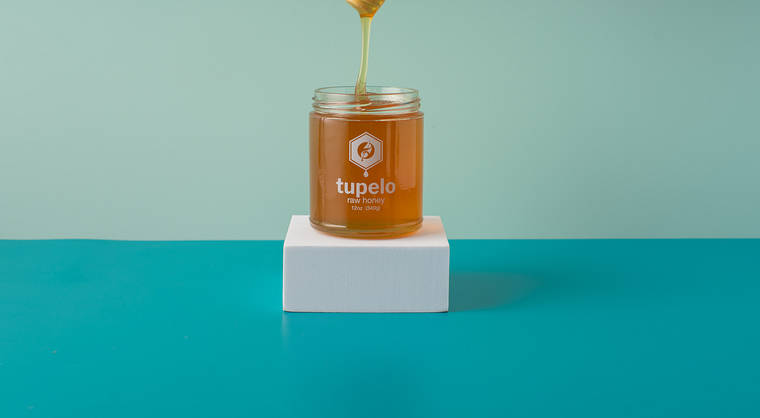
Tupelo Honey has a light, warm amber color and a flavor often described as buttery, with a mild floral character and none of the sharper, more assertive notes found in darker varietals like Buckwheat Honey. The finish is soft rather than forceful, which is part of why it's prized as a finishing honey — something drizzled on at the table rather than baked into the background of a recipe.
How to Shop for Genuine Tupelo
Because true Tupelo is rare and commands a higher price, the name is worth examining carefully when you're shopping. A few things to consider:
How to Use It
Because its flavor is delicate rather than bold, Tupelo Honey is best used where it can actually be tasted, not competed with. Try it drizzled over warm biscuits or cornbread, stirred into a mild herbal tea, spooned over plain yogurt, or paired with a soft cheese like brie where its buttery character has room to come through. Save your darker, bolder honeys — like Buckwheat or Bourbon — for recipes where they need to hold their own against stronger flavors.
Curious to taste Tupelo alongside our other rare raw varietals? Our Premium Honey Sampler is a good way to compare it side by side with Sourwood and Manuka.