How Beehives Keep Cool in Summer
by Adagio Bees
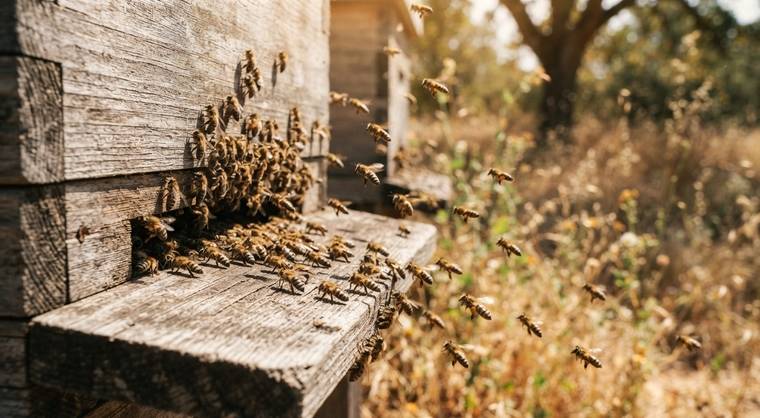
On a punishing August afternoon, a crowded beehive feels less like a pastoral ornament than a small, humming engine room. Adult bees occupy the combs, larvae develop in wax cells, and nectar is concentrated into honey. Outside, the air barely moves. Inside, the colony works to keep the brood nest within a comparatively narrow temperature range, generally around 34 to 35 degrees C.
Virgil imagined the hive as a tiny commonwealth. In summer, it may be more accurate to picture a city managing its own climate, with no thermostat and thousands of workers responding to changing conditions.
Air conditioning, bee style
Honey bees regulate hive temperature collectively. Workers gather near the entrance and along interior passageways, then fan their wings to move air through the colony. The effect depends on coordinated behavior rather than a permanent ventilation crew. Warm, moist air moves out while outside air is drawn into the hive.
This airflow serves two related purposes. It helps protect developing brood from excessive heat, and it assists with honey production. Fresh nectar contains much more water than finished honey. Bees handle and redistribute it while ventilation encourages moisture to evaporate. Once the nectar is sufficiently concentrated, the bees typically seal it beneath a wax capping for storage.
On very hot days, bees may gather in a conspicuous curtain outside the entrance. Beekeepers call this bearding. It can look alarming, but it often reduces congestion inside and allows air to circulate more readily. Bearding alone does not mean a colony is preparing to swarm. An attentive beekeeper considers the hive's overall condition rather than diagnosing it from the front porch.
Water becomes part of the machinery
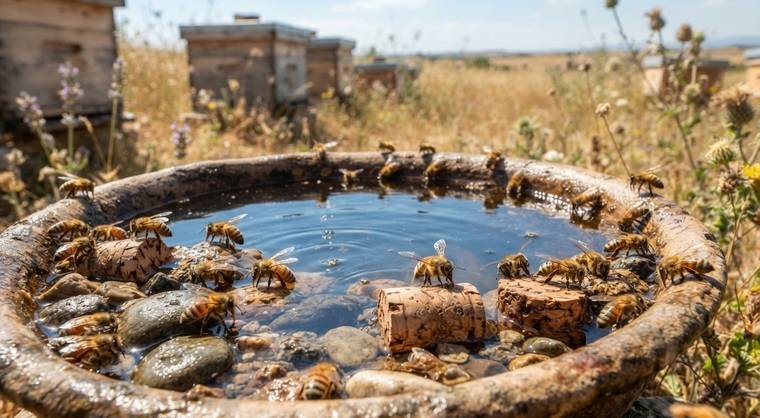
When ventilation is not enough, foragers collect water and deliver it to bees inside. Small droplets are distributed within the hive, where moving air promotes evaporation and cooling. Some foragers may collect water instead of nectar. That shift illustrates an important cost of extreme weather: time and energy spent cooling the colony cannot also be spent foraging or processing nectar.
A beekeeper can help by maintaining a dependable water source near the apiary. It should include corks, stones, or another rough landing surface so bees can drink without falling into deep water. The container should be cleaned and refilled regularly. Setting it out before severe heat arrives also gives foragers time to add it to their routes.
What beekeepers should watch
Heat management begins with appropriate hive placement and sound equipment. Afternoon shade can reduce solar heating, while a clear entrance allows air and bee traffic to move. Colonies also need adequate space. Overcrowding may worsen congestion, although adding boxes should reflect colony strength and local conditions rather than a calendar rule.
During a heat wave, frequent inspections can be counterproductive. Opening a hive disrupts its interior environment and may expose brood and comb to direct sun. Beekeepers should work with purpose, avoid leaving frames outside, and handle heavy combs carefully. Beeswax becomes softer as temperatures rise, making unsupported or roughly handled comb more vulnerable to damage.
Extra ventilation is sometimes appropriate, but more is not automatically better. Large openings can complicate a colony's defense against robbing bees and other intruders. Local climate, hive design, and colony strength all matter. The goal is not to make the hive feel breezy, but to identify anything preventing the colony from regulating itself.
Heat reaches beyond the hive
The flowering landscape is the other half of the story. High temperatures and drought can shorten bloom periods, reduce nectar secretion in some plants, or alter when flowers are useful to pollinators. Rainfall, soil moisture, plant species, and time of day all influence nectar availability. A field that looks lavishly in bloom may not provide a dependable nectar flow.
Varietal honeys preserve some of this seasonal complexity. raw honey - sourwood, with notes of anise spice and maple, comes from a tree that flowers in summer. raw honey - goldenrod reflects a plant that can provide late-season forage where it grows abundantly. Dark, malty raw honey - buckwheat offers another reminder that honey's character begins with particular flowers under particular conditions. A botanical label usually identifies the predominant nectar source, not the only flower the bees visited.
Helping honey bees and native bees
Managed honey bees and native bees need different kinds of support. A managed colony may benefit from nearby water, appropriate equipment, and careful monitoring. Native bees are a diverse group, and many species live alone rather than in populous hives. They generally need suitable forage throughout the season and undisturbed places to nest.
A shallow, well-maintained water station may serve several insects, but it cannot replace habitat. Concern for honey bees should not erase the needs of native pollinators. The practical approach is to support responsible hive management while preserving the varied landscapes on which both groups depend.
Inside the August hive, no bee understands thermodynamics in the human sense. Yet thousands respond to temperature, humidity, airflow, and need, producing a stable interior through accumulated acts. The marvel is not that bees defeat summer. It is that they continually negotiate with it.